When Do You Really Need a Dedicated Server? Six Real Use Cases
A dedicated server is overkill for most sites but right for some workloads. See six real use cases, cost trade-offs and how to choose between VPS and dedicated.
Dedicated servers have a reputation as the "premium" tier that serious websites graduate to. In practice, the majority of websites never need one, and many that buy one would be better served by a well-sized VPS. A dedicated server is a specific tool for specific problems. Here is how to recognize those problems and how to avoid paying for hardware you will not use.
What you get with a dedicated server
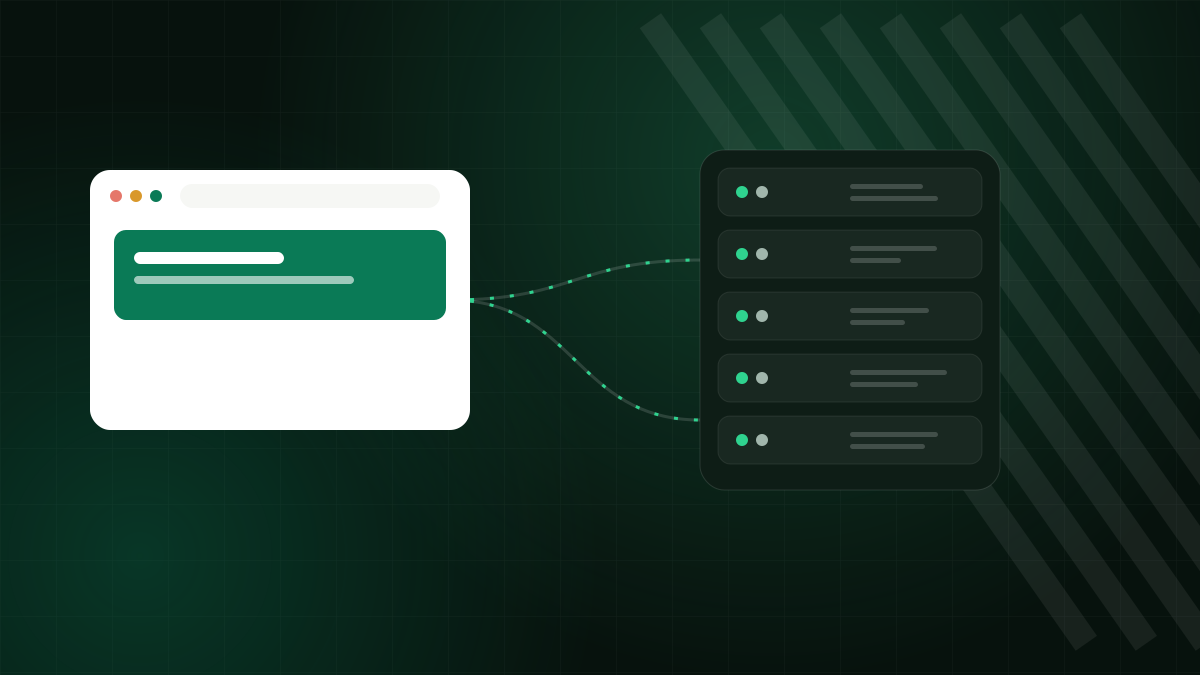
A dedicated server is a whole physical machine allocated to you. No other customer shares its processor, memory, disks or network port. You get predictable performance, freedom to choose the operating system and software, and often more flexibility in storage and network configuration. You also get the full responsibility of running it, unless you add management services.
Use case 1: Large or demanding databases
Databases love memory and fast disks. A big e-commerce catalogue, an analytics platform or a data-heavy application may need tens of gigabytes of RAM dedicated to caching data. On virtual servers, you can reach limits on memory or disk throughput, and a dedicated machine lets you pick hardware specifically for this load, such as multiple NVMe drives.
Use case 2: Sustained high traffic
If your site has constant heavy traffic, as opposed to occasional spikes, dedicated hardware avoids contention and gives consistent response times. Note that a CDN and good caching can remove most of the load first, so test those before buying hardware. See how our CDN option works.
Use case 3: Consolidating many sites
Agencies and hosting businesses that run dozens or hundreds of sites can find that a single powerful server, divided with a control panel, costs less than many small plans, and provides full control over isolation and resource policies.
Use case 4: Specialized software or tuning
Game servers, video processing, search engines, custom network services, and tools that require specific kernel settings or hardware features are often easier on bare metal. If you need to control the virtualization layer yourself, for example to run your own virtual machines, a dedicated server is the place to do it.
Use case 5: Compliance and isolation requirements
Some organisations have policies or contractual obligations that require single-tenant infrastructure. Dedicated hardware satisfies a requirement for not sharing a physical machine with others, though certifications and compliance depend on the provider and the data centre, so ask directly rather than assuming. This article is general information, not legal advice.
Use case 6: Predictable cost at scale
If you use a lot of resources continuously, a flat monthly price for a dedicated machine can be easier to budget than usage-based cloud billing. This holds when utilization is steady; if your load is mostly idle, elastic options usually cost less.
When a dedicated server is the wrong choice
- You run a small business site or blog.
- Traffic is modest or spiky and could be absorbed by caching.
- Nobody on the team can administer a server and you have not planned for managed help.
- The performance issues come from slow code or too many plugins, which new hardware only masks.
VPS or dedicated: a quick comparison
| Factor | VPS | Dedicated |
|---|---|---|
| Resources | Reserved slice | Entire machine |
| Scaling up | Fast; often a few clicks | Slower; hardware change or migration |
| Performance consistency | Good | Best |
| Cost | Lower | Higher |
| Hardware choice | Limited | Broad |
If you are unsure, a VPS is the cautious option, because you can move to dedicated later when the numbers prove it.
Plan for resilience
A single physical machine is a single point of failure. If a disk or power supply dies, your service is affected until it is replaced or restored. Mitigate this with RAID, regular off-server backups, monitoring, and a documented recovery plan. For critical systems, consider a second server with replication.
Plan for administration
Someone must install updates, watch hardware health, manage backups and respond to alerts. If that someone is not on your team, include management in the budget. Underestimating administration is the most common reason dedicated servers disappoint their owners.
A decision test
Before ordering dedicated hardware, answer four questions with numbers: what is the peak load measured on your current plan, which resource is the limiting one, what did caching and a CDN already remove, and what would the same workload cost on a larger VPS? If you cannot answer the first two, you are guessing, and the cheapest next step is to measure. If you can, and the numbers point to hardware, a dedicated server is a sound investment rather than a status symbol.
Dedicated servers at Zebra Hosting
We deliver dedicated servers within 24 hours of the order being processed by our team. If you are still deciding between VPS and dedicated, send us your workload details via the contact page and we will give an honest recommendation, even when the answer is the smaller option.